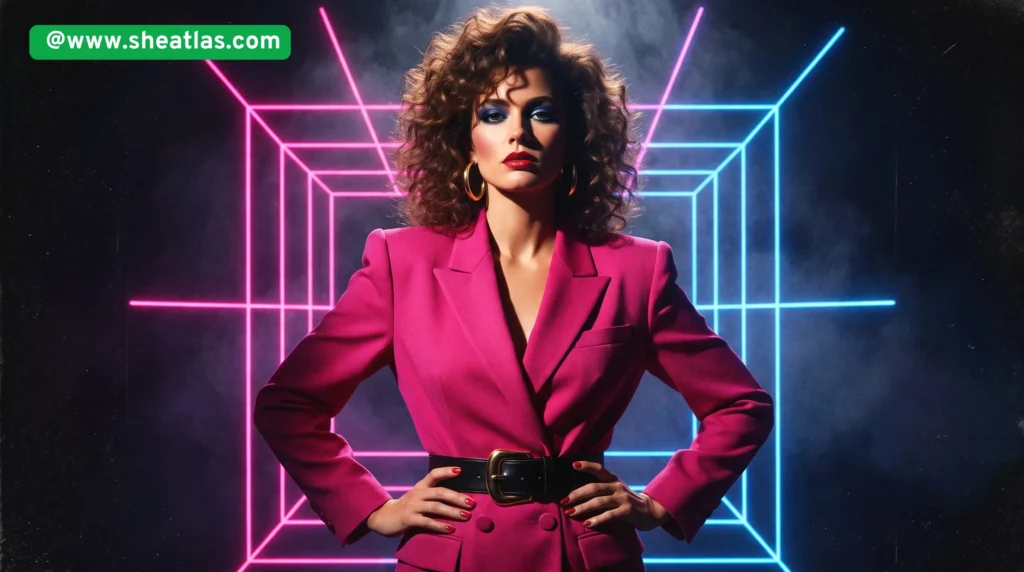
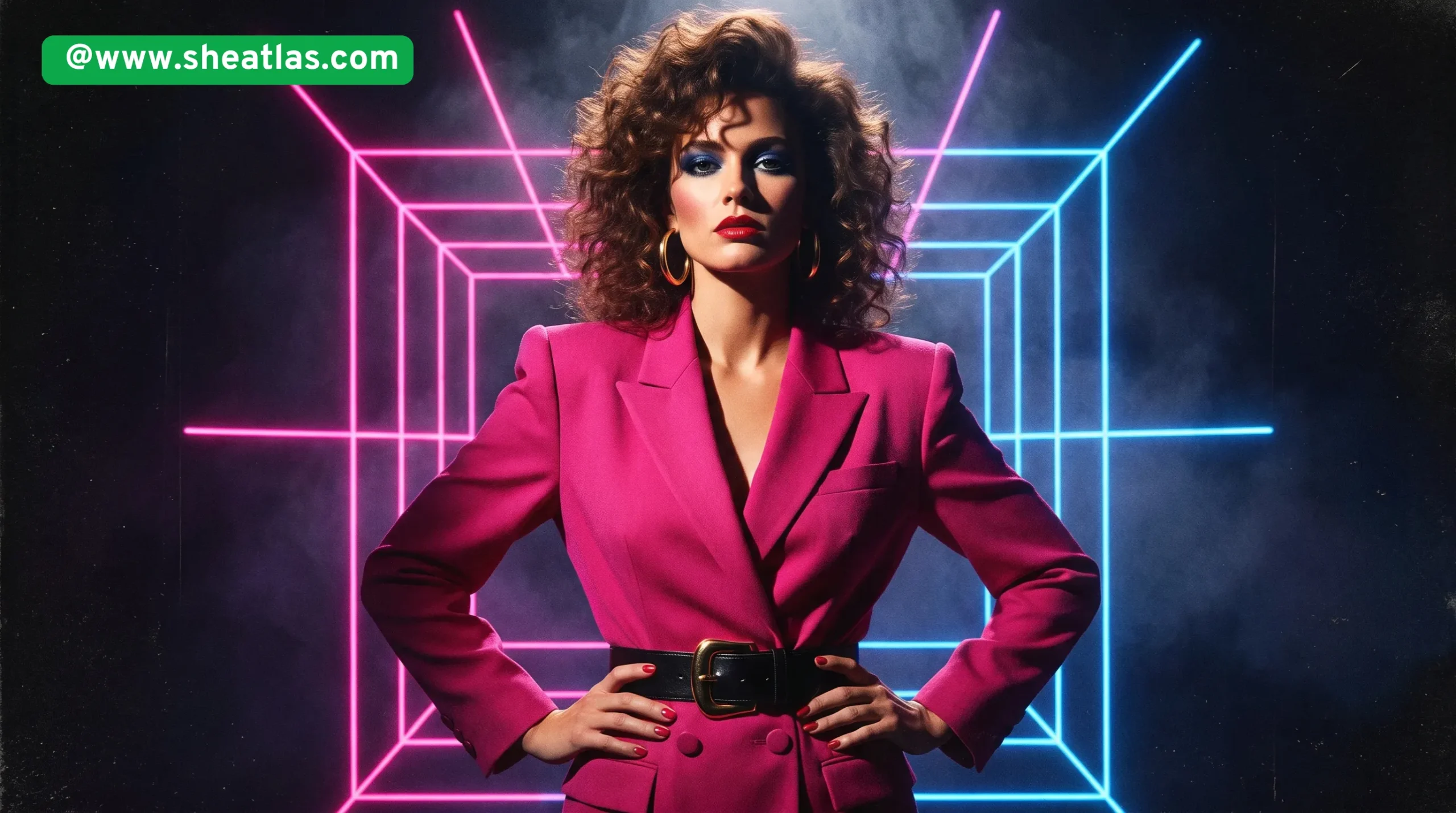
Close your eyes and picture the 1980s woman. She’s striding through a glass office tower in a suit with shoulders that could hold up the sky. She’s sweating through a Jane Fonda workout in neon spandex and leg warmers. She’s dancing in a club with fishnets, lace gloves, and a crucifix around her neck. She’s flipping through a Ralph Lauren catalogue in a preppy cable-knit sweater, planning her weekend in the Hamptons.
She is all of these women and none of them. Because the 1980s wasn’t just a decade of fashion. It was a decade of becoming. For American women, clothing became the language of a revolution—one that said, I am here. I am powerful. I am unapologetically myself.
The 1980s gave us the most visually arresting, culturally significant, and emotionally charged fashion of the modern era. It was a time when bigger meant better, brighter meant bolder, and your outfit wasn’t just what you wore—it was who you were. Let’s step back into that world of excess, ambition, and unparalleled creativity, and explore why the fashion of the 1980s still captivates us today.
The Power Suit: Armor for the Boardroom
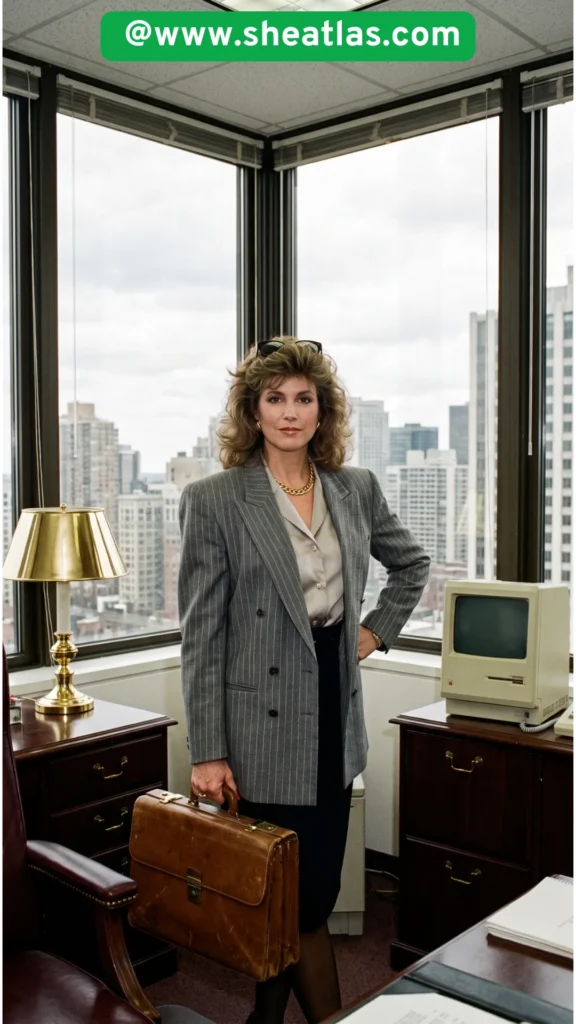
If there was one garment that defined the 1980s woman, it was the power suit. And at its heart was the shoulder pad that glorious, exaggerated, foam-filled emblem of female ambition.
The shoulder pad became the icon of 1980s fashion, creating a look of self-confidence and power. The broad shoulder line also helped to create a slimmer-looking waist and curvaceous, hourglass figure. But this was about much more than silhouette. As women flooded into the workforce in unprecedented numbers with female labor force participation reaching historic highs they needed armor. They needed to command respect in boardrooms that had been exclusively male for generations.
“Power dressing” gave women a masculine appearance. Exaggerated padded shoulders became fashionable, symbolizing strength, power, and female independence. Shoulder pads were inserted everywhere—in jackets, blouses, coats, and dresses. The wider the shoulders, the stronger the woman appeared.
Designers embraced this moment with gusto. Giorgio Armani, Thierry Mugler, and Calvin Klein created suits that merged hyper-masculine and feminine aesthetics. Oversized double-breasted suits and floppy silk “ties” appeared on runways and movie sets, in office buildings and boardrooms. Corporate businesswomen, First Lady Nancy Reagan, and global icon Princess Diana alike embraced the suit look. The suits permeated pop culture, showcased in movies such as *9 to 5* (1980) and Working Girl (1988) and TV shows like Dynasty (1981-89) and Moonlighting (1985-89)—all of which featured strong female characters who brought even more popularity to the power dressing trend.
This was a decade when Americans watched glass ceilings shatter across the professional spectrum. In 1981, Judge Sandra Day O’Connor began her appointment as the first woman on the Supreme Court. Three years later, U.S. Representative Geraldine Ferraro became the first woman vice-presidential candidate for a major party, and Sally Ride was America’s first woman in space. And Oprah Winfrey, in 1986, became the first woman to produce and own her own talk show. These women didn’t just break barriers they did it wearing shoulder pads.
The power suit wasn’t about hiding femininity; it was about expanding what femininity could mean. As more women entered traditionally male-oriented work environments, they found it advantageous to dress as though they were in command, and sure of their sexuality. This meant jackets with heavily padded shoulders, vibrant colours, big hair-dos, bold accessories, and shoes with pointed toes and spiked heels.
The Fitness Craze: When the Gym Becatme the Runway
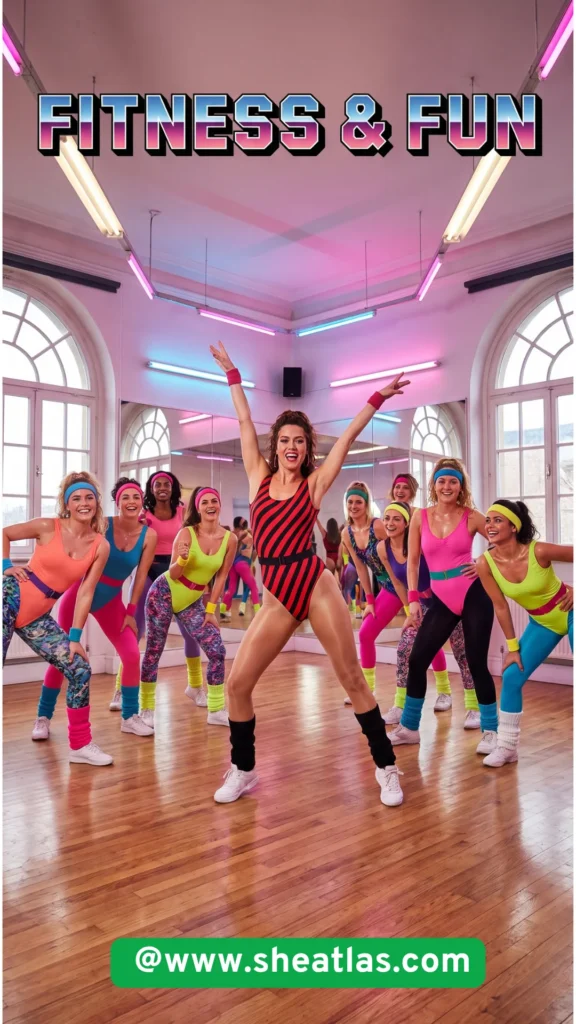
But the 1980s woman wasn’t all work and no play. She was also getting physical.
The fitness craze that began in the 1970s swelled into a self-conscious mania in the 1980s. Exercise clothes jogging pants, sweatshirts, hoodies, and leggings moved from the gym to the street. Headbands, legwarmers, and off-the-shoulder tops became fashion classics thanks to Jane Fonda, Olivia Newton-John, and Jennifer Beals.
Jane Fonda was the architect of this revolution. Her first aerobics video, released in 1982, turned her into the nation’s workout guru. Donning a leotard and leg warmers, the star led viewers through low-impact aerobics backed by ’80s synth-pop. Her iconic red and black striped leotard paired with tights and leg warmers was the ’80s version of athleisure. In total, Fonda sold 17 million videos in the 1982 -1995 series, an enormous success that spawned imitators and sparked a boom of women’s exercise classes, opening the formerly male-dominated fitness industry to women and establishing the celebrity-as-fitness-instructor model.
The aesthetic was loud and proud. Baggy sweaters, skinny lycra, high-rise bodysuits, headbands, and neon-coloured leggings were among the aerobic attire options. Printed leotards, leg warmers, scrunchies, and high-cut fitness briefs over spandex pants bid goodbye to boring gym outfits. This fitness style matched the decade’s theme of excess.
What made this trend so revolutionary wasn’t just the spandex it was what it represented. Women were ditching their girdles and so-called “ladylike” attire in favor of comfort and freedom of movement. It revealed a profound evolution not only in the way women moved through their lives, but also in how we thought about our own bodies. As designer Norma Kamali and others like Donna Karan and Azzedine Alaïa moved to using stretchy fabrics such as Lycra for body-conforming clothing, a significant shift occurred: “Women’s bodies were now shaping the clothes, rather than clothes shaping the body”.
The Pop Culture Explosion: Madonna and the Rise of the “Wannabe”
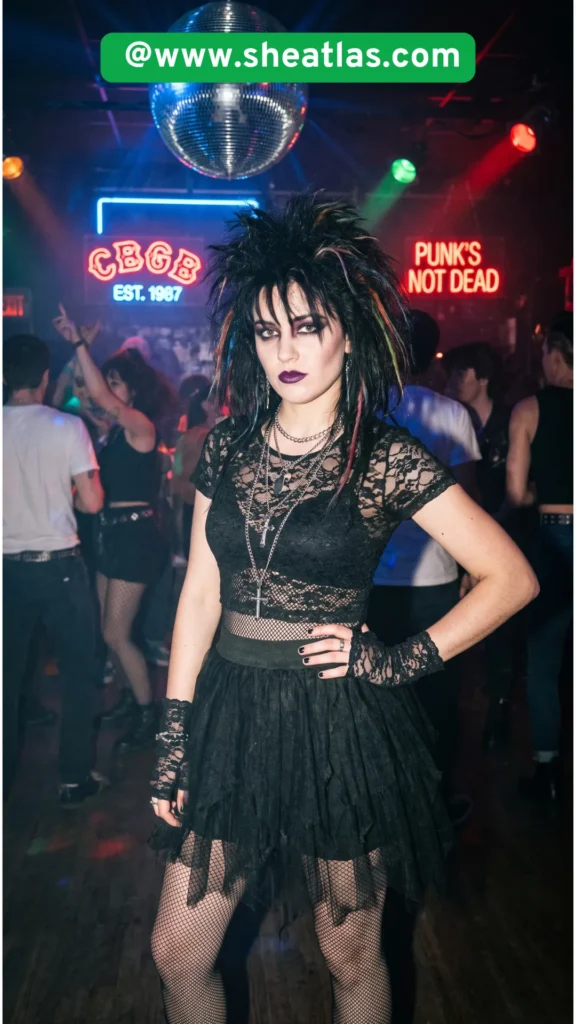
While the power suit spoke to the professional woman and the leotard to the fitness enthusiast, a third force was shaping 1980s fashion one that came from the clubs, the music videos, and the streets. That force was Madonna.
When Madonna emerged into stardom in the mid-1980s, an unusually high number of women, particularly young women and girls, began to dress and do their hair and makeup in the style that Madonna displayed in public. The term “Madonna wannabe” was popularized by writer John Skow in a May 1985 Time magazine cover story. In 1985, Macy’s department store even opened “Madonnaland,” a boutique selling clothes modelled after the singer’s style.
Madonna’s rebellious Boy Toy style gave “freedom” to young women. Her glam-punk look signaled her emerging feminist influence. She helped influence an entire generation to embrace spiky hair, fishnet stockings, and leather. The “street urchin” look she popularized included short skirts layered over colored tights or leggings, accessorized with multiple bracelets and necklaces, fingerless gloves, and lace hair bows.
Her influence was palpable from her very first appearance on MTV in 1984. With her punk-inspired black miniskirts, mesh-knit tank tops, and iconic “Boy Toy” belt, she instantly captured the imagination of a generation. She inspired looks we still know and love today: short skirts over leggings, necklaces, rubber bracelets, fishnets, hair bows, long layered strings of beads, headbands, lace ribbons, lingerie as outerwear, huge crucifix jewelry, lace gloves, and tulle skirts.
The punk movement that began in the late 1970s made shock chic. The conspicuously aggressive style of fashion included body piercings, torn jeans, and graffiti-covered vintage leather jackets. By the mid-’80s, punk experienced a revival: studded belts, Dr. Martens, and leather skirts were all the rage. This rebellious style marked a significant break from the decade’s glamorous beginning.
But Madonna was just one piece of the pop culture puzzle. The 1980s was a decade where music and television drove fashion trends like never before and perhaps never since. The “Cosby sweater” those loud, colorful, patterned knits became a phenomenon simply because The Cosby Show was one of America’s most popular TV shows. The director wanted to maintain each character’s individualism, and because so many people were on screen simultaneously, patterned clothing seemed the obvious answer. The result was a trend that defined the decade and one that fashion history will never forget, for better or worse.
The Preppy Revolution: Ralph Lauren and the American Dream
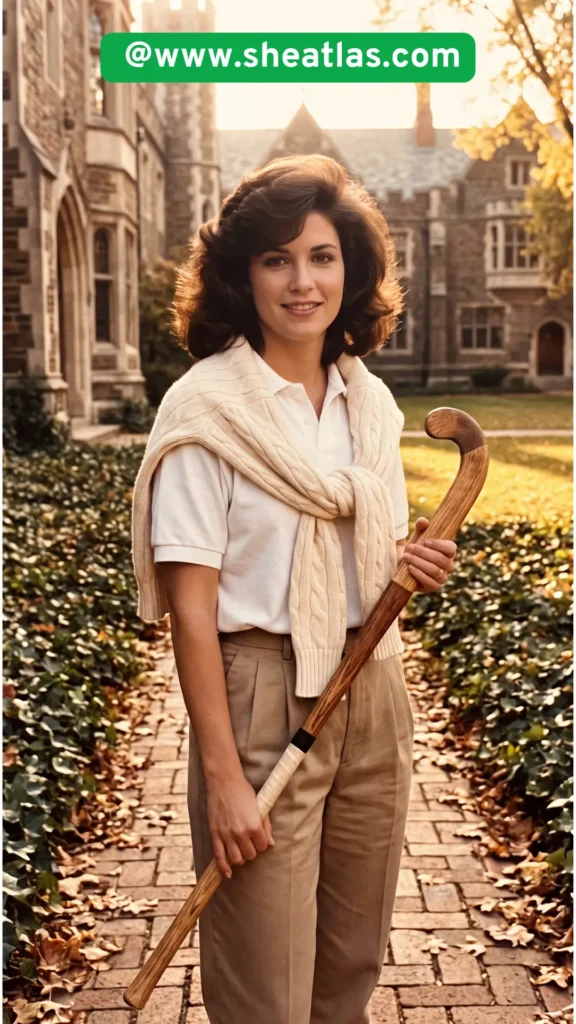
Not every woman in the 1980s wanted to look like she was running a corporation or headlining a rock concert. For many, the aesthetic was more collegiate, more aspirational what we now call “preppy.”
Ralph Lauren gave preppy style an air of sophisticated cool with distressed fabrics, breezy elegance, and vibrant hues. The classic polo short-sleeved knit shirt featuring the now-iconic Polo player became a staple of American fashion. Casual wear for the yuppie set was collegiate or preppy with khaki pants, traditional blue blazers, crisp white shirts, polos by Izod Lacoste and Ralph Lauren, and cotton cardigans draped over one’s shoulders, loosely tied in front.
This look was immortalized by the films of John Hughes. Molly Ringwald’s style in Pretty in Pink and Sixteen Candles became the quintessential preppy look of the 1980s. Despite not being part of the typical preppy crowd, Andie in Pretty in Pink incorporated many preppy pieces into her style. This took preppy out of its exclusivity and into mainstream media, introducing the styles to a wider audience.
The preppy look represented a distinctly American fantasy one of privilege, leisure, and effortless elegance. It was the style of the country club, the Ivy League campus, and the summer house on Nantucket. But it was also accessible. Anyone could buy a polo shirt and a pair of khakis. Anyone could aspire to that life.
The Designers Who Defined the Decade
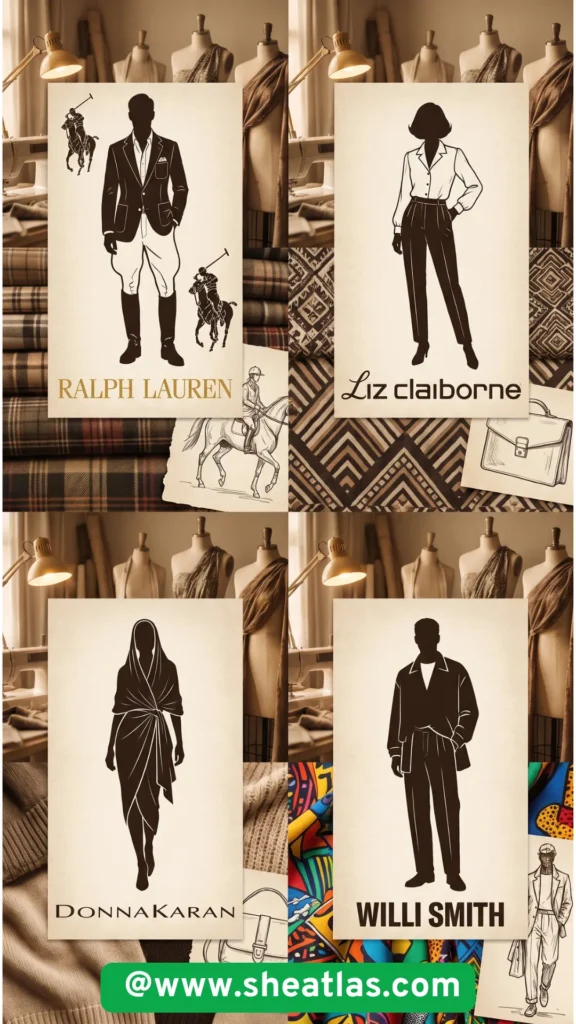
Behind every great fashion moment are the designers who made it possible. The 1980s saw an explosion of American design talent that forever changed how women dressed.
Liz Claiborne revolutionized the way working women put together their wardrobes because she was one of them. She made it easy for them as they pioneered up corporate ladders in the 1970s and 1980s, offering coordinated outfits at once serious and stylish, but also affordable. Claiborne found a way to merge the working women’s on-the-go lifestyle with a desire for elegant, yet easy and stylish clothing.
Donna Karan launched her own label in 1985 and embraced the concept of separates with her “seven easy pieces” garments that could be mixed, matched, and layered to create a complete wardrobe. “Donna Karan remains the epitome of the woman she designs for,” wrote Carrie Donovan in 1986.
Ralph Lauren expanded his empire with preppy, folkloric, prairie, and safari themes that distinguished the decade. He channeled pure Americana into clothing that felt both timeless and of the moment.
Willi Smith was one of the most successful young Black fashion designers in America in the 1980s. He created smart, tailored sportswear for women, and his clothes found mass appeal among a new generation of American women who entered the workforce in the 1970s and 1980s. He was the first designer to house womenswear and menswear under the same brand.
Patrick Kelly, a young, gay African American designer from Mississippi, became an international sensation in Paris during the mid-1980s for his bold and often whimsical designs. His tube dresses from 1985 were featured in French Elle.
And let’s not forget the international influence. Japanese avant-garde designers like Issey Miyake, Yohji Yamamoto, and Rei Kawakubo created a new aesthetic in the early 1980s that incorporated elements of traditional Japanese clothing, materials, and construction with innovative textiles, forms, and finishes. Their designs were a bold suggestion for global design, aimed at abolishing the polarity between future and past, male and female, and East and West.
The Details: Accessories, Makeup, and the “More is More” Philosophy
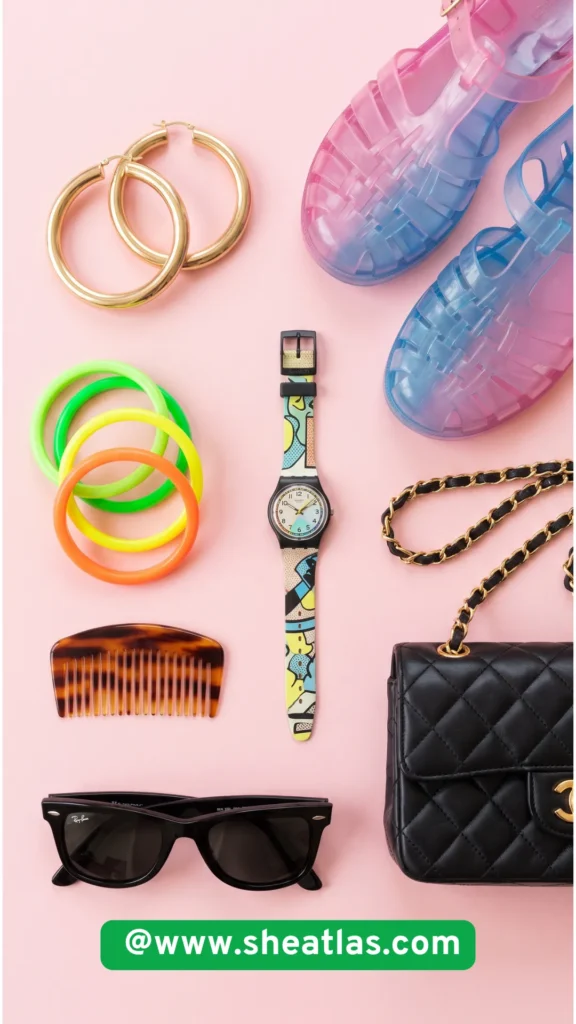
No discussion of 1980s fashion would be complete without acknowledging the excess. The 1980s was a decade where “more is more” wasn’t just a slogan it was a way of life.
Large and wild accessories like colorful sunglasses, an abundance of plastic bangle bracelets, and huge hoop earrings became the hallmark of the 1980s style. Jelly shoes and sandals, hot pink blush, bike shorts worn alone or under a skirt, blue eyeshadow and eyeliner, and leg warmers were all part of the look. Sequins, beads, and embroidery were popular accents on everything from evening dresses to daywear.
Makeup was equally bold. The 1980s saw heavy, smudged eyeliner paired with pastel eye shadow and frosted lips. Women wore bright, heavy makeup with light-colored lips, dark and thick eyelashes, and pink or red rouge. The hair was big—teased, permed, and sprayed into submission.
This was the era of the “Me” decade, and fashion reflected that self-focus. Clothing was designed to convey a sense of power and confidence by exaggerating a broad silhouette and structured form. Gold jewelry and metallic fabrics were highly fashionable and signaled the wearer’s financial success.
The Legacy: Why 1980s Fashion Still Matters
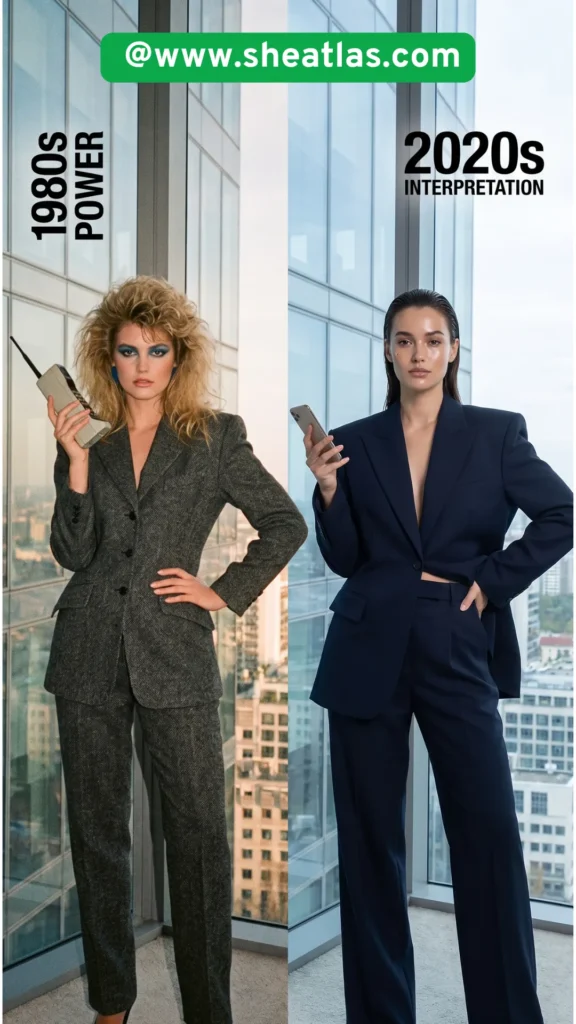
The 1980s fashion styles for women are best described as “big,” “bright,” and “loud”. But they were also so much more. They were transformative.
The 1980s was a creative decade for designers who reinvented fashion for working women, revitalized vintage styles, and promoted new materials and concepts of beauty. It was a decade where women used fashion to say, “I am here, and I will not be ignored.”
The trends of the 1980s continue to resonate today. Shoulder pads have made multiple comebacks. Athleisure the blending of workout wear with everyday fashion owes everything to Jane Fonda and her neon-clad followers. The punk aesthetic that Madonna popularized still influences street style and high fashion alike. And the power suit has never really gone away it’s just evolved.
But perhaps the most enduring legacy of 1980s fashion is the permission it gave women to be multiple things at once. You could be a power-suited executive by day and a leotard-clad fitness enthusiast by night. You could be a preppy princess on the weekend and a punk rocker at the club. You could mix patterns, layer textures, and combine styles in ways that had never been done before. This eclecticism this anything goes mentality was a reflection of postmodern values that celebrated nostalgia, ethnic dress, androgyny, eclectic and novel clothing combinations, surprising or humorous appearance, and nonconformity.
The 1980s woman wasn’t just wearing clothes. She was writing her own story—one shoulder pad, one leotard, one statement necklace at a time.
Bringing the 1980s into Your Wardrobe Today
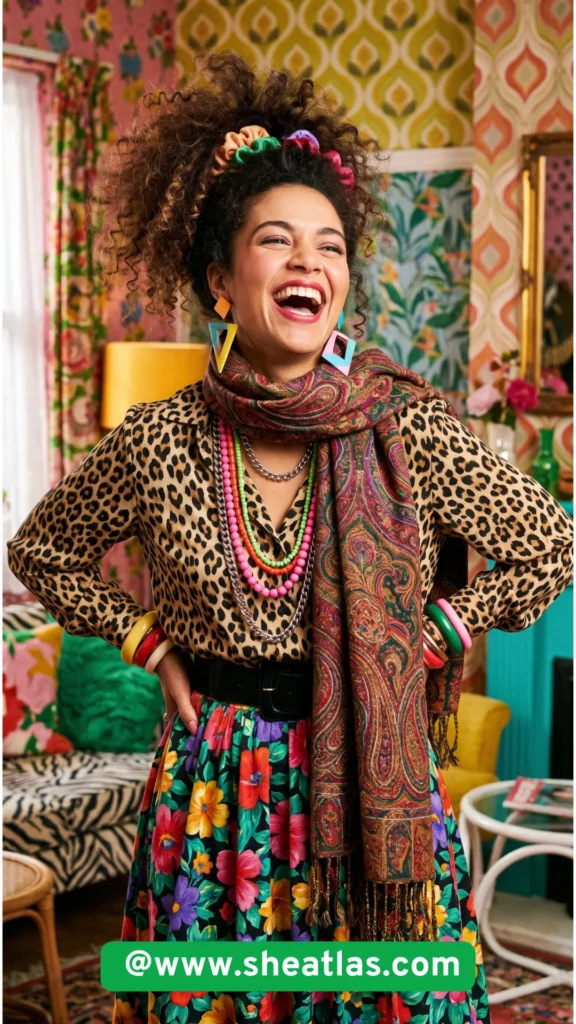
So how can you channel the spirit of the 1980s without looking like you stepped out of a time capsule? The key is selective nostalgia.
Start with structure. A blazer with subtle shoulder padding can give you that power-dressing confidence without overwhelming your frame. Look for pieces that create that inverted triangle silhouette broad at the shoulders, narrow at the waist.
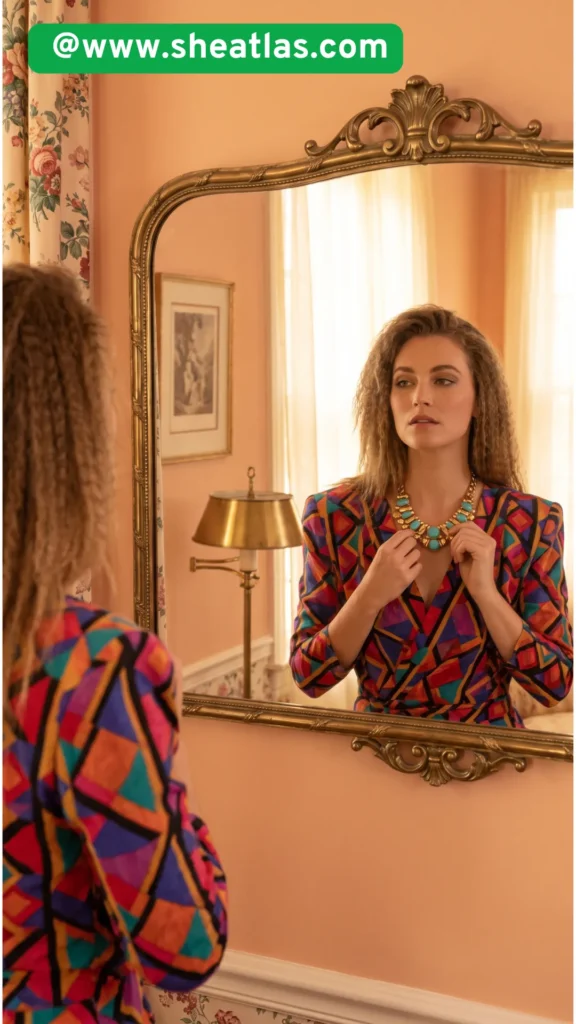
Embrace color and pattern. The 1980s was all about eye-straining colors and patterns. A bright fuchsia top, a pair of acid-wash jeans, or a bold geometric print can add instant ’80s energy to your outfit.
Don’t forget the accessories. Hoop earrings, stackable bangles, and statement belts are easy ways to nod to the decade without committing to a full-on retro look.
For the fitness enthusiast, high-waisted leggings, cropped tops, and bold sneakers are having a major moment and they’re a direct homage to the aerobics craze of the 1980s.
And for the punk at heart, fishnets, leather jackets, and layered jewelry are as relevant today as they were when Madonna first wore them.
The 1980s taught us that fashion is fun. It’s expressive. It’s a tool for becoming who you want to be. So go ahead add some shoulder pads. Wear something neon. Throw on a pair of statement earrings. The 1980s woman knew that life was too short to dress boringly. And honestly? She was right.
Your Turn: Which 1980s Icon Are You?
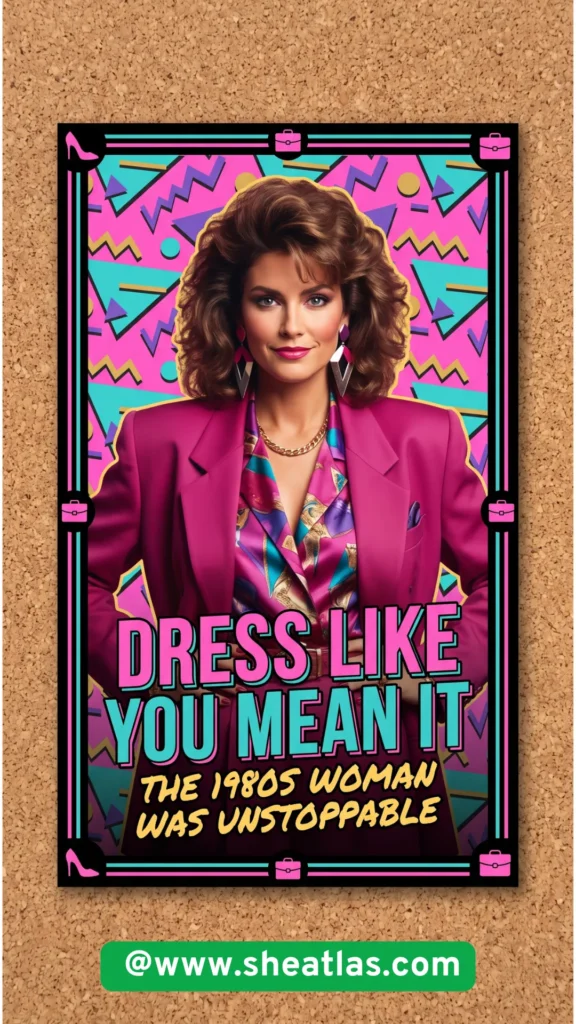
Now it’s time to look in the mirror and ask yourself: Which 1980s woman am I?
Are you the Power Executive the one who walks into the boardroom and commands respect before you say a word? The one in the tailored suit with the perfectly padded shoulders and the heels that click with authority?
Are you the Fitness Fanatic the one who lives in leggings and crop tops, who runs on endorphins and neon, who proved that comfort and style could coexist?
Are you the Preppy Princess the one in the polo shirt and the cable-knit sweater, the one who exudes effortless elegance and aspirational ease?
Are you the Punk Rebel the one in fishnets and leather, the one who uses fashion to shock, to provoke, to say I don’t play by your rules?
Or are you all of them the postmodern woman who refuses to be defined by a single style, who mixes and matches with abandon, who knows that fashion is a language and she is fluent in every dialect?
The beauty of 1980s fashion is that there was room for everyone. It was a decade of inclusion not in the sense of political correctness, but in the sense of possibility. Anyone could be anything. Anyone could reinvent themselves. Anyone could become the woman they wanted to be.
So here’s your challenge: Try one 1980s-inspired look this week. It doesn’t have to be a full costume. Just one piece a blazer, a pair of hoops, a bold red lip. See how it makes you feel. Notice how you carry yourself differently. Because that’s the real magic of 1980s fashion: it wasn’t just about how you looked. It was about how you felt.
And if you felt powerful? If you felt free? If you felt like you could take on the world?
Then you understood the 1980s woman perfectly.
What’s your favorite 1980s fashion trend? Are you a power-suit devotee, a leggings-and-sweatshirt girl, or somewhere in between? Drop a comment below and share your go-to ’80s-inspired look we’d love to hear how you’re bringing the best of the decade into your wardrobe today. And if you’re ready to shop the look, check out our curated collection of vintage-inspired pieces that capture the spirit of the era without sacrificing modern comfort. The 1980s called and they want you to dress like you mean it.